Access to Clean Water and Sanitation Around the World – Mapped
July 08, 2015
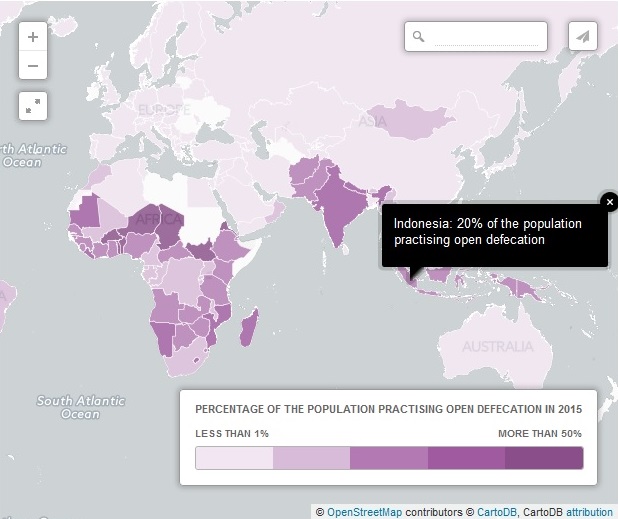
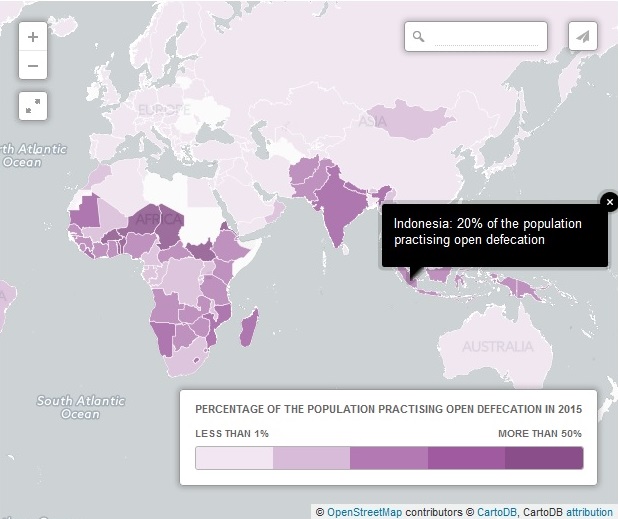
Around the world, 946 million people still go to the toilet outside. Eritrea is top of the list, with 77% of its population practising open defecation, a practice which can lead to the contamination of drinking water sources, and the spread of diseases such as cholera, diarrhoea, dysentry, hepatitis A and typhoid. A huge global effort has been focused on reducing these numbers and new data from the WHO/Unicef Joint Monitoring Programme, which has measured the progress made on access to drinking water and sanitation since 1990, shows that there have been improvements in certain areas.
Eritrea’s neighbour Ethiopia has achieved the largest decrease in the proportion of the population practising open defecation, from 92% in 1990 to 29% in 2015.
“Ethiopia has made a concerted effort to reduce open defecation rates over the past five years,” says Tim Brewer, Wateraid’s policy analyst on monitoring and accountability. “The government came up with a plan of action to get everyone in the country to stop practising open defecation, and made sure that donors contributing to the sanitation sector also followed the same plan. This hasn’t been the case in Eritrea, where there has been conflict.”
Brewer says the two countries are a good example that sanitation is not only down to environmental factors, but also to whether governments are willing to invest time and resources into making change happen.
Nine in 10 people who practice open defecation live in rural areas. But at the current rates of reduction it is estimated that open defecation will not be eliminated among the poorest in rural areas by 2030 – one of the targets of the sustainable development goals.
How many people around the world have access to improved sanitation facilities?
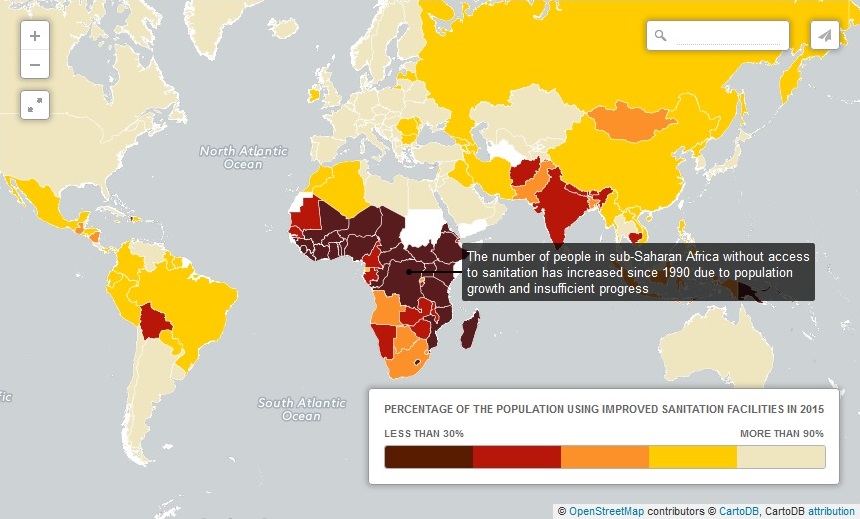
Among the world’s city-dwellers, 82% of people now use an improved sanitation facility, defined as one that hygienically separates human waste from human contact. Only 51% of the global rural population has access to such facilities.
Globally it is estimated that 2.4 billion people still lack improved sanitation. They live primarily in Asia, sub-Saharan Africa, and Latin America and the Caribbean. In sub-Saharan Africa rapid population growth matched by insufficient progress means that numbers without access to sanitation have increased since 1990 to 17% of the population.
Which countries met the millennium development goal on sanitation?
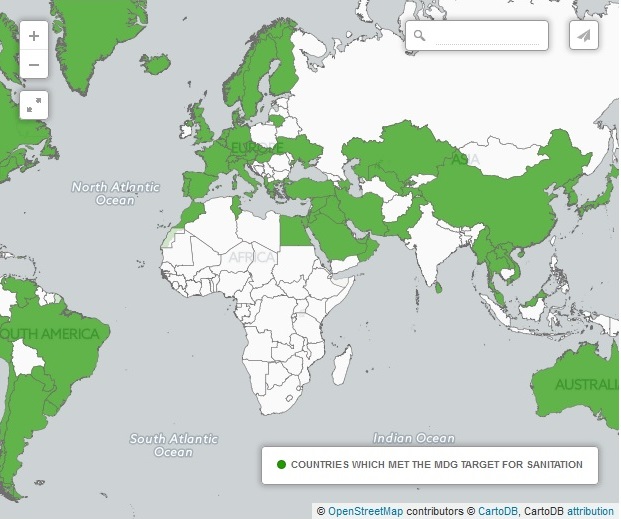
It is not surprising, then, that the MDG target to extend access to improved sanitation from 54% of the global population in 2000 to 77% in 2015 has not been met. The target has been missed by almost 700 million people, and 57 countries made “no or limited” progress. Only four developing regions met the target: the Caucasus and central Asia, eastern Asia, northern Africa, and western Asia.
How many people around the world have access to an improved source of drinking water?
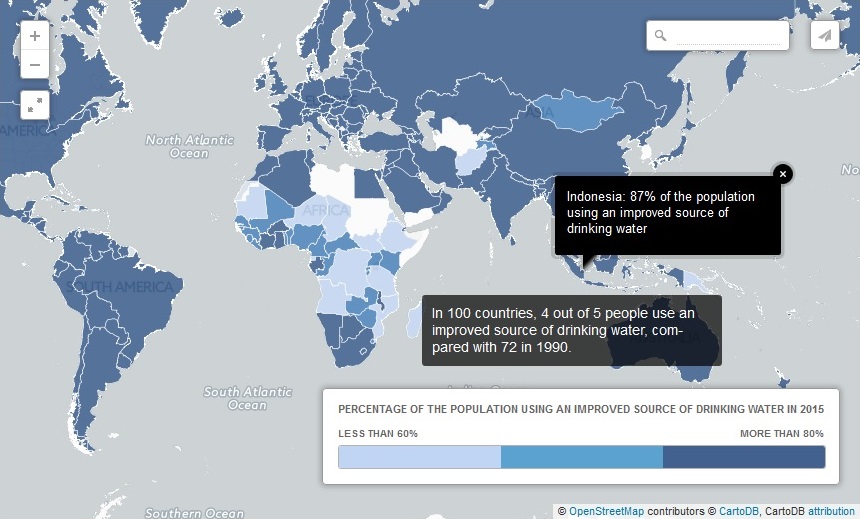
Better progress has been made on improving access to water: 91% of the global population uses an improved water source – one that protects water from external contamination – up from 76% in 1990. The number of people who lack access to an improved source of drinking water has fallen below 700 million people – to 663 million – for the first time.
As with sanitation, progress in rural areas trails behind urban areas: eight out of 10 people without improved drinking water sources live in rural areas. In sub-Saharan Africa, while 427 million people gained access during the MDG period, 319 million people still do not have access to clean water, the most of any region.
Which countries met the millennium development goal on water?
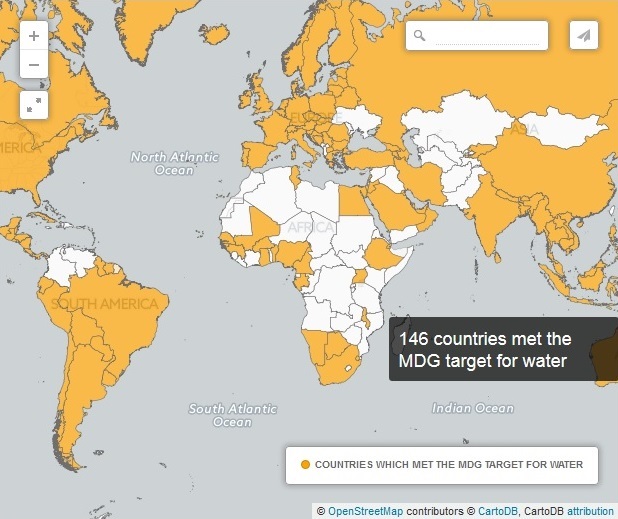
So why has there been such a disparity between achieving the MDGs on water and sanitation?
“They should be done hand-in-hand but historically all the effort has gone into water, and sanitation has taken a bit longer to be prioritised,” says Brewer. “Combined, UK aid flows to water and sanitation make of 2% of the money donated, but most goes to water. It’s also easier for a politician to stand in front of a water well for a photo than a latrine.”
The overall picture is mixed, he adds. “It’s good that the water goal has been met; millions of people have been reached with access to water and sanitation since 1990, and some countries have made great progress,” says Brewer. “But in general, most of the people who have access to water don’t have access at home. And is it safe? Is the water affordable and enough for their needs? And again, the poorest countries and the poorest people are being left behind; sub-Saharan African and South Asia are really behind. We need to focus on those people and contribute to making progress in those areas.”
Source: theguardian.com